
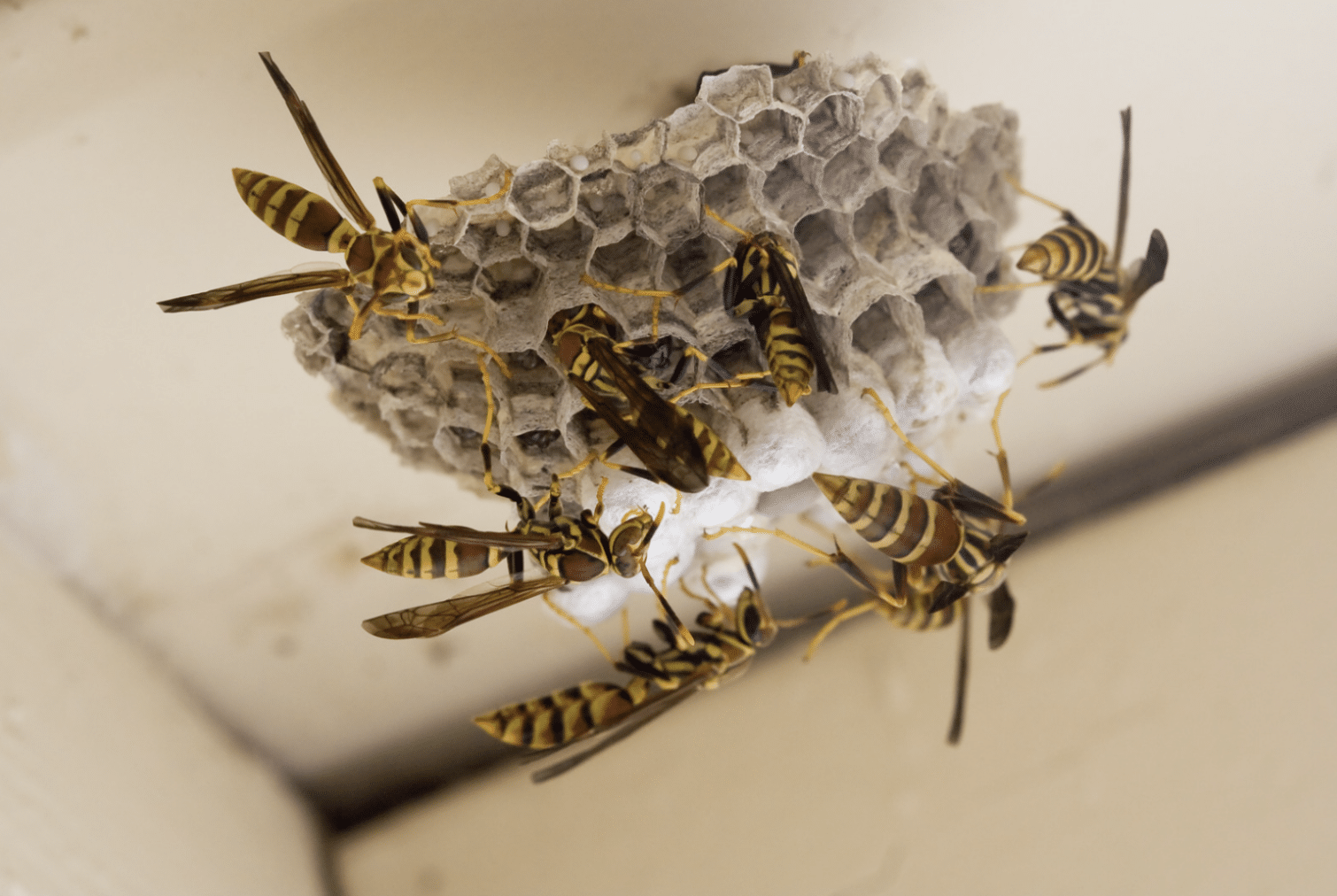
The signs of a wasp nest in wall cavities are often subtle at first — a faint buzzing sound, a few wasps entering and exiting the same small gap near your siding — and by the time most homeowners notice, the nest has already grown significantly. The same is true for nearly every kind of wildlife nesting problem, whether it’s a chimney blocked by a bird’s nest, squirrels settling into an attic, or raccoons denning under a deck. Early signs are almost always there; they’re just easy to miss until the problem becomes obvious.
This guide walks through where wildlife commonly nests around a home, the specific signs to watch for in each location, and why catching these signs early makes such a meaningful difference.
Why Early Detection of Wildlife Nesting Matters
Every nesting animal, from wasps to raccoons, follows a similar pattern: find a safe, sheltered space, settle in, and build out that space over time. A wasp nest that starts as a small paper structure the size of a golf ball can grow to the size of a basketball within a season if left undisturbed. A single bird’s nest blocking a chimney flue can become a serious fire and carbon monoxide risk once heating season starts. And a mother raccoon that dens in an attic in spring may have a full litter of kits by early summer, turning a manageable situation into a far more complicated one.
Beyond the practical risks, early nests are simply easier and less invasive to remove. Waiting until a nest is fully established, or until young animals are present, often turns a straightforward job into a more delicate one that requires extra care, time, and cost.
Signs of a Wasp Nest in Wall Cavities and Siding
Wasps frequently choose wall voids, soffits, and siding gaps as nesting sites because they offer protection from weather and predators. Watch for:
- A small number of wasps consistently entering and exiting the same gap or crack in siding, trim, or brick
- A faint but persistent buzzing sound coming from inside a wall, especially on warm afternoons
- Papery, gray nest material visible around an entry point if the nest has grown large enough to be seen
- Increased wasp activity near windows or vents on the same side of the house
- A sudden increase in wasp sightings inside the home, which can indicate the nest has grown large enough that wasps are finding their way through wall gaps into living space
Signs Your Chimney Is Blocked by a Nest
A chimney blocked by nesting material is one of the more common — and more dangerous — wildlife nesting issues homeowners encounter, since birds, squirrels, and raccoons are all drawn to chimneys as a sheltered, vertical nesting space. Signs include:
- Scratching, chirping, or rustling sounds coming from inside the chimney or flue
- Smoke not drawing properly when a fire is lit, or a smoky smell inside the home
- Visible nesting material at the top of the chimney or just inside the flue opening
- A strong, musty odor coming from the fireplace, particularly during warm weather
- Debris or nesting material falling into the fireplace itself
Because a blocked chimney creates both fire and carbon monoxide risks, this is one of the nesting issues that warrants prompt attention rather than a wait-and-see approach.
Signs of Nesting in Attics and Roof Spaces
Attics are one of the most common nesting locations for squirrels, raccoons, and birds, thanks to their warmth, shelter, and relative privacy. Look for:
- Scratching or scampering noises, especially around dawn and dusk when many nesting animals are most active
- Visible entry points around roof edges, soffits, or vents, often with chewed or torn material around the opening
- Matted insulation or nesting material — leaves, fabric, shredded paper — gathered in a corner
- Staining on ceilings or ceiling tiles, which can indicate nesting material trapping moisture
- An unusual odor, which can point to accumulated droppings or, in some cases, a deceased animal
Signs of Nesting Under Decks, Porches, and Sheds
Ground-level structures create sheltered, hidden spaces that are attractive to groundhogs, skunks, foxes, and opossums, particularly during denning season.
- Freshly dug soil or an entry hole along the perimeter of a deck, porch, or shed foundation
- A strong, musky odor near the structure, especially from skunks or foxes
- Visible tracks or matted-down vegetation leading to and from a specific entry point
- Increased pet interest — sniffing, digging, or barking — directed at one particular area
- Sightings of an adult animal repeatedly entering and exiting the same location at dawn or dusk, which often indicates young are present inside
For a broader overview of the wildlife species most likely to cause nuisance and property issues in Pennsylvania, Penn State Extension’s guide to wildlife nuisance and damage is a valuable outside resource for homeowners looking to understand regional patterns.
Why Timing Matters for Removal
Nesting season timing has a real effect on how removal is handled. Many species, including birds, raccoons, and squirrels, are protected during active nesting periods, meaning removal must account for the presence of young rather than simply excluding the adult animal. Removing an adult without accounting for dependent young can result in orphaned animals trapped inside a wall, attic, or chimney — a worse outcome for everyone involved. This is one of the biggest reasons early detection, before a full nest with young is established, leads to a simpler and more humane resolution.
Key Takeaways
- Early signs of wildlife nesting are often subtle: faint sounds, small entry points, or brief animal sightings at dawn and dusk.
- A wasp nest in a wall cavity grows quickly if left alone, and a chimney blocked by nesting material creates real fire and carbon monoxide risks.
- Different areas of a property — walls, chimneys, attics, and ground-level structures — attract different nesting species.
- Timing matters: catching a nest before young are present makes removal simpler, faster, and more humane.
- Professional inspection is the most reliable way to correctly identify a nesting animal and address it before the problem grows.
Frequently Asked Questions
How can I tell if wasps are nesting inside my wall versus just visiting my yard? Wasps nesting inside a wall will show a consistent pattern of activity — the same group of wasps entering and exiting one specific gap repeatedly, often accompanied by a buzzing sound from inside the wall. Wasps simply foraging in your yard won’t show this concentrated, repeated activity at a single point of entry.
Is it dangerous to have a chimney blocked by a bird or animal nest? Yes. A blocked chimney can prevent smoke and carbon monoxide from venting properly, creating a serious safety hazard if a fire is lit before the blockage is cleared. Any signs of a blocked flue should be addressed by a professional before using the fireplace.
What time of year is nesting activity most common? Spring and early summer are peak nesting season for most wildlife, as animals seek shelter to raise young. However, some species, including certain rodents and wasps, remain active into fall, so signs of nesting can appear at various points throughout the warmer months.
Can I remove a nest myself once I spot the signs? It depends on the species and situation. Wasp nests can sometimes be managed with over-the-counter products if caught very early and located somewhere accessible, though wall-cavity nests are best left to professionals. Nests involving protected species, active young, or hard-to-reach locations like chimneys and attics should always be handled by a trained professional.
What happens if I wait too long to address a nesting issue? Waiting typically means a larger nest, a bigger population, or the presence of dependent young — all of which make removal more complex, more time-consuming, and potentially more costly. Early signs are worth investigating promptly rather than waiting for the problem to become obvious.
If you’re noticing any of these early warning signs on your property, our Pest Patrol team and wider Wildlife Infantry crew can inspect the situation and identify exactly what’s nesting before it becomes a bigger problem. Contact us today for a free inspection.