
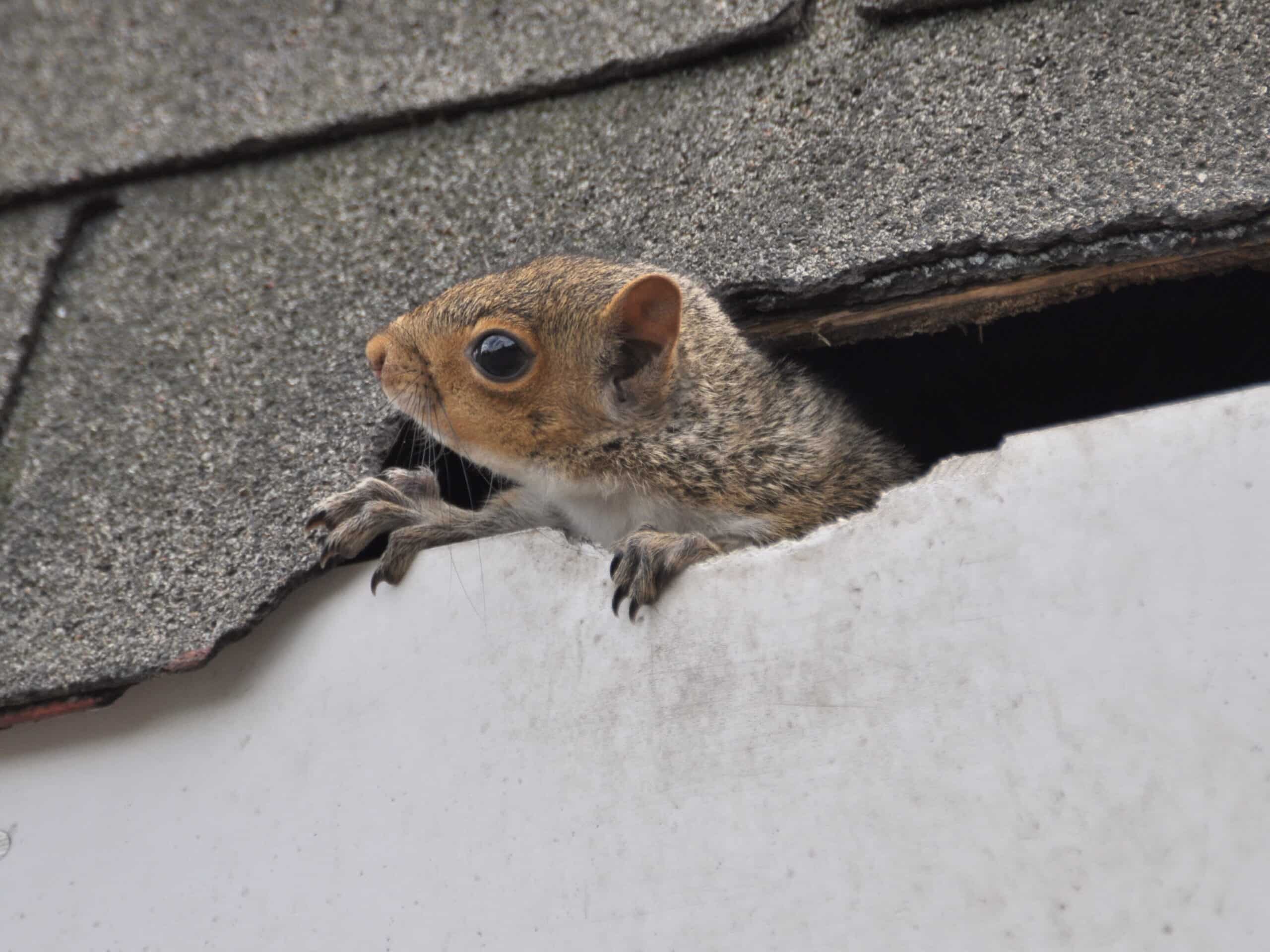
If you’ve started hearing scratching, rolling, or scampering sounds above your ceiling right around sunrise, there’s a good chance you have a squirrel in the attic. Fall is when these calls pick up across the Main Line, and it isn’t a coincidence. Squirrels spend the season scouting for a warm, dry place to ride out the winter, and a Pennsylvania attic with one loose vent or soft piece of fascia looks like prime real estate.
Here’s why autumn is the squirrels’ favorite time to move in, how to tell they’ve breached your perimeter, and what a proper removal and exclusion plan looks like.
Why Do Squirrels Move Into Attics in the Fall?
Squirrels move into attics in fall because they’re looking for a protected spot to spend the winter, and a home’s attic offers more warmth and shelter than a leafy tree nest. Pennsylvania’s tree squirrels don’t truly hibernate, so they need a reliable den for the cold months, and young squirrels born in late summer are out looking for territory of their own.
A few seasonal factors stack up at once:
- Late-summer litters are on the move. According to the Pennsylvania Game Commission, some gray squirrels have a second litter in July or August. By fall, those young squirrels are independent and searching for shelter.
- No winter shutdown. Pennsylvania tree squirrels stay active all winter, only holing up for a few days during snowstorms or extreme cold. A sheltered attic beats a drafty leaf nest.
- Food caching season. Fall is when squirrels gather and stash nuts, which keeps them busy around your trees, gutters, and roofline, often within jumping distance of the house.
- Easy access points. Overhanging branches act like a bridge to the roof, and older Main Line homes often have gaps at soffits, gable vents, and roof returns that a determined squirrel can chew open.
Signs You Have a Squirrel in the Attic
The most common signs of a squirrel in the attic are daytime noises overhead (especially early morning and late afternoon), chewed openings along the roofline, and torn-up insulation or nesting debris. Because squirrels are active during the day, their noises usually line up with your morning routine rather than the middle of the night.
Run a quick recon of your property and listen for or look for:
- Scratching, scurrying, or rolling sounds in the ceiling or walls, often heard at dawn and again before dusk
- Chewed holes or gnaw marks on fascia boards, soffits, roof vents, or the corners where rooflines meet
- Squirrels going in and out of the same spot on the roof or running along the gutters
- Shredded insulation, leaves, or twigs balled up in the attic, which often signals a nest
- Droppings and urine stains on attic insulation or stored items
- Chewed wiring or flickering lights, a serious red flag since squirrels gnaw constantly to keep their teeth in check
Night noises can point to a different intruder. Flying squirrels, raccoons, and mice are more active after dark, which is one more reason a professional wildlife inspection is worth it before anyone sets a trap.
What Damage Can Squirrels Cause?
Squirrels in an attic can damage insulation, chew through electrical wiring, contaminate the space with droppings and urine, and widen entry holes that let in water and other animals. The longer they stay, the bigger the repair bill tends to be, so fall is the right time to act rather than waiting until spring.
The main risks include:
- Fire hazard from chewed wiring
- Insulation damage that drives up heating costs
- Roof and wood damage that lets rain and cold air in
- Secondary invaders moving in through the same opening once it’s enlarged
- Odor problems if a squirrel gets trapped and dies inside a wall or attic space
How Professional Squirrel Removal and Exclusion Works
Professional squirrel removal works by finding every entry point, getting the squirrels out humanely, and then sealing the house so they can’t get back in. Removing the animals without sealing the openings is only half the mission, since the next squirrel in the neighborhood will find the same gap.
A typical plan looks like this:
- Inspection. A technician confirms the species, tracks down entry points, checks for young, and assesses any damage to insulation, wood, or wiring.
- Humane removal. Depending on the situation, that can mean one-way exclusion devices that let squirrels leave but not return, or live trapping.
- Exclusion. Every entry point is sealed with durable materials that hold up to chewing.
- Damage review. You get a clear picture of what needs cleanup or repair, from soiled insulation to chewed fascia.
- Follow-up. A return check confirms the attic is clear and the seals are holding.
Timing matters too. Sealing an opening while young squirrels are still inside can trap them, and adult squirrels will chew new holes trying to reach them. Confirm no squirrels are inside before closing up holes, which is exactly why a careful inspection comes first.
Our wildlife removal team handles squirrel jobs like this across the Main Line every fall. For more on the process, see our guide to safe and humane squirrel removal.
Can You Get Rid of Attic Squirrels Yourself?
You can take some preventive steps yourself, but removing squirrels already living in your attic is usually a job for a professional. DIY trapping often misses some of the animals, and sealing a hole at the wrong time can trap squirrels inside, leading to more chewing damage or a dead animal in the wall.
Pennsylvania also has rules about handling nuisance wildlife. The Pennsylvania Game Commission requires traps to be checked daily and says live wildlife can’t be kept, sold, or given away. A licensed, insured pro handles those details for you.
Prevention steps worth doing this fall:
- Trim tree limbs back so they don’t overhang or touch the roof
- Check vent covers, soffits, and fascia for gaps or soft, rotted wood
- Cap your chimney with a secure, properly fitted cover
- Keep bird feeders away from the house, since spilled seed draws squirrels in close
Key Takeaways
- Fall is peak season for a squirrel in the attic because squirrels are seeking winter shelter and late-summer young are looking for territory.
- Pennsylvania tree squirrels don’t truly hibernate, so they stay active in your attic all winter.
- Daytime scratching, chewed rooflines, and shredded insulation are the most common warning signs.
- Chewed wiring is a real fire risk, not just a nuisance.
- Effective removal means humane eviction plus sealing every entry point so squirrels can’t return.
Frequently Asked Questions
How do I know if it’s a squirrel in my attic or something else? Timing is your best clue. Squirrels are active during the day, so noise at dawn and late afternoon usually points to them. Noises late at night are more likely to be flying squirrels, raccoons, or mice. An inspection confirms the species and the entry point.
Will squirrels leave the attic on their own? Rarely. Once squirrels find a warm, protected den, they tend to stay through the winter and may use it to raise young in spring. Even if they leave temporarily, the open entry point invites them or other animals back.
Is it safe to just seal up the hole? Not until you’re sure no squirrels are inside. Sealing them in can lead to new holes chewed through your roof or walls, or an animal dying in the attic. Professionals typically use one-way exclusion devices first, then seal the opening.
How long does squirrel removal take? It depends on the number of squirrels and entry points. Many jobs take several days from inspection through exclusion and a follow-up check, since the goal is to make sure every squirrel is out before the final seal goes on.
Does homeowners insurance cover squirrel damage? Coverage varies by policy, and damage caused by rodents and other pests is often excluded. Check your policy or talk to your agent before assuming a repair will be covered.
Secure Your Attic Before Winter Sets In
If you’re hearing activity overhead, don’t wait for squirrels to dig in for the season. Wildlife Infantry is licensed, insured, and local, with no upselling and no scare tactics. Contact Wildlife Infantry today for a free inspection, or call (484) 716-2177 to get a plan in place before winter.